Introduction
Muscle tension and post-exercise soreness are familiar concerns for people who exercise regularly, spend long hours at a desk, or participate in physically demanding activities. After a workout, a long day on your feet, or an extended period of sitting, some people look for practical ways to make their muscles feel more comfortable and support their recovery routine.
Percussive massage devices have become one option for this purpose. Often called massage guns, these handheld devices deliver repeated pulses through an attachment that contacts the body. Depending on the device and how it is used, this type of massage may provide temporary relief from perceived muscle tightness and help some people feel more comfortable after physical activity.
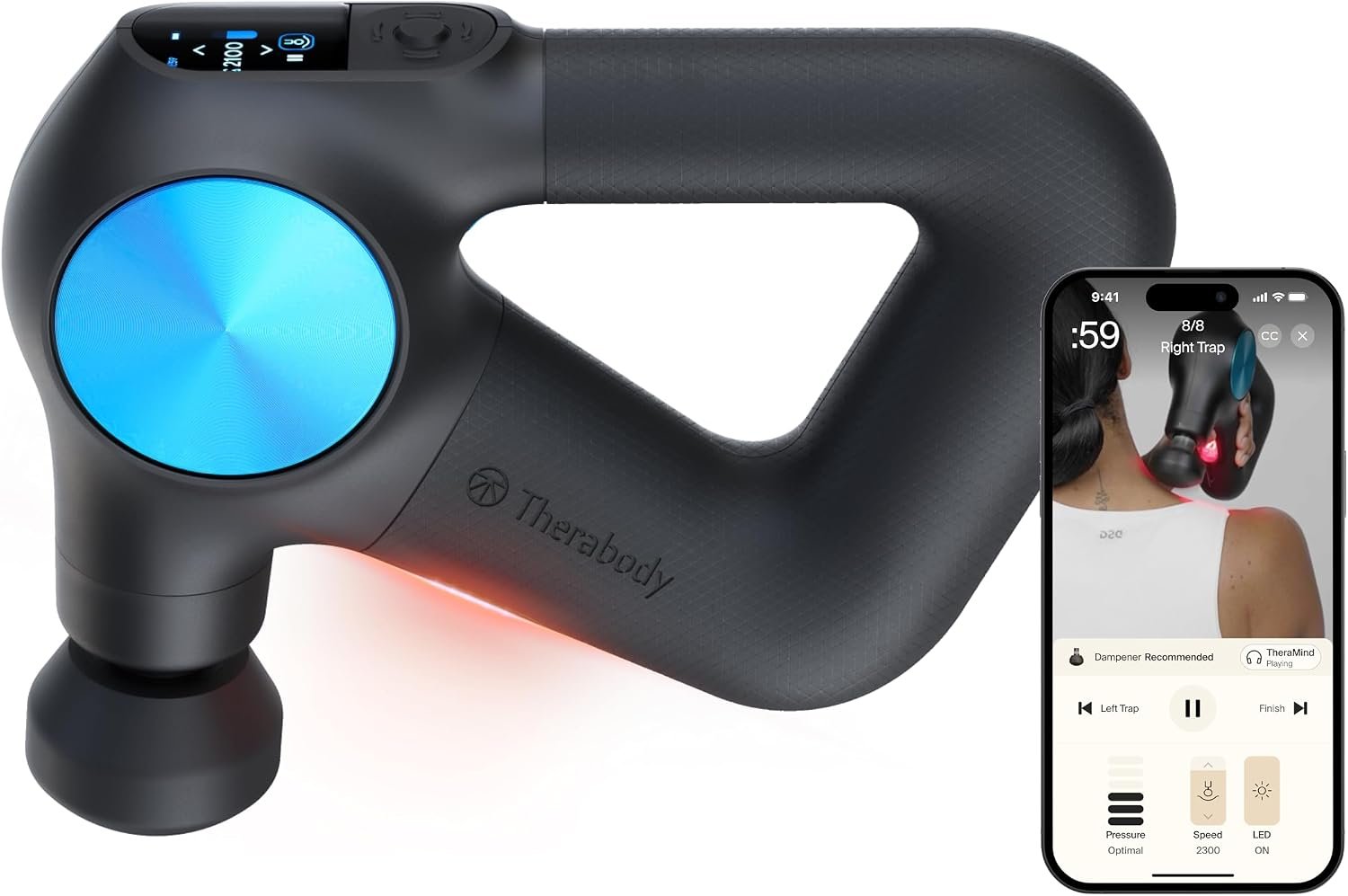
The Theragun PRO Plus 6-in-1 Deep Tissue Massage Gun in Black, from Therabody, belongs to the category of percussion therapy devices designed for home use and other recovery settings. Its product name emphasizes a multifunctional approach, combining percussion massage with additional recovery-oriented features. The exact functions, attachments, operating modes, and included accessories should be confirmed through the current product listing and manufacturer documentation.
Understanding how a massage gun works is important before deciding whether it belongs in a personal fitness routine. These devices can be useful for certain comfort and recovery goals, but they are not substitutes for medical treatment, rehabilitation guidance, appropriate rest, or a balanced exercise program. More pressure and longer sessions do not necessarily produce better results, and some people should avoid percussion massage altogether.
This guide explains the general principles behind percussion massage, the features to examine when considering the Theragun PRO Plus, practical ways to incorporate a massage gun into a routine, and important safety considerations. It also compares massage guns with other recovery tools so readers can make an informed decision based on their needs.
Understanding the Theragun PRO Plus
The Theragun PRO Plus is marketed as a multifunctional percussion massage device. Percussion massage guns use a motorized mechanism to move an attachment repeatedly against the body. This creates a series of rapid, controlled impacts intended to provide localized mechanical stimulation.
People commonly use these devices on selected muscles after exercise or as part of a general relaxation routine. Some also use them before activity as a brief component of their warm-up, although a massage gun should not replace movement-based preparation.
The term “deep tissue” in a product name should be interpreted carefully. It describes the style of mechanical stimulation associated with percussion massage rather than establishing that a device can safely or effectively treat every deep muscular problem. The amount of pressure experienced depends on the attachment, speed setting, contact angle, applied force, and characteristics of the user’s tissues.
The Theragun PRO Plus is presented as a 6-in-1 device, suggesting that it combines multiple functions or recovery options. However, buyers should verify what the six functions specifically include in the current version. Product configurations, software, accessories, and regional listings can vary, and the product name alone does not establish every technical detail.
For prospective users, the central question is how the device’s actual functions fit into their recovery habits. Someone who exercises frequently may value flexible settings and attachments, while someone who occasionally experiences general muscle tightness may need only a simple device with a small number of controls.
Key Features to Understand
1. Percussion Massage Technology
Percussion massage is the core function associated with a massage gun. The device moves an attachment back and forth, delivering repeated mechanical impulses to the area where it is applied.
Some users find this sensation useful for temporarily easing the feeling of tightness in muscles after physical activity. The rhythmic stimulation may also make an area feel more relaxed, although individual responses vary.
A percussion device does not need to be pressed forcefully into the body to be useful. In fact, excessive pressure can make the experience uncomfortable and may increase the risk of bruising or tissue irritation.
When using a massage gun, it is generally sensible to begin with a low setting, allow the attachment to move naturally over the target muscle, and stop if the sensation becomes painful. The goal is controlled, tolerable stimulation rather than trying to force the attachment as deeply as possible into the tissue.
A massage gun is also different from a medical procedure intended to diagnose or treat a specific injury. If pain is persistent, severe, unexplained, or associated with swelling or loss of function, professional assessment is more appropriate than repeatedly applying percussion massage.
2. Multiple Recovery Functions
The product description identifies the Theragun PRO Plus as a 6-in-1 device. This suggests that it is intended to provide more than one type of recovery-related function.
Multifunctional recovery products can appeal to people who want several options within a single device rather than maintaining separate tools for different purposes. However, the practical value depends on which functions are included, how they work, and whether the user will actually use them.
Before choosing the Theragun PRO Plus, check the current product documentation for a complete explanation of its six functions. Confirm whether each function requires a particular attachment, setting, accessory, or operating procedure.
It is also important to distinguish between different kinds of stimulation. Percussion massage, heat-based features, vibration, and other recovery technologies work in different ways and may have different safety considerations. Their effects should not be treated as interchangeable.
If the product includes additional functions beyond percussion, read the instructions for each one independently. A feature that is appropriate for a particular muscle group or recovery goal may not be suitable for every user or body area.
3. Interchangeable Massage Attachments
Massage guns often use interchangeable heads designed for different contact areas and sensations. The shape and firmness of an attachment can influence how pressure is distributed across the body.
For example, a broad attachment may be suitable for larger muscle groups, while a smaller attachment may concentrate contact over a narrower area. Softer attachments can provide a different sensation from firmer ones.
The exact attachment set supplied with the Theragun PRO Plus should be verified on the current listing. Buyers should not assume that every attachment shown in promotional material is included with every package.
Choosing an appropriate head is as important as choosing a speed setting. A small, firm attachment can concentrate pressure, making it less suitable for sensitive areas or users who are unfamiliar with percussion massage.
For general use, select an attachment intended for the target muscle and begin gently. Avoid using a narrow or rigid attachment over bones, joints, the front of the neck, or other sensitive structures.
Attachments should be cleaned and maintained according to the manufacturer’s instructions, particularly when a device is shared between users.
4. Adjustable Intensity and Control
Massage guns commonly provide different speed or intensity settings so that users can adapt the sensation to their comfort level and intended use.
A lower setting may be appropriate when first learning how the device feels, when working around a sensitive muscle, or when performing a short introductory session. Some experienced users may prefer a different setting for larger muscle groups, but higher intensity is not automatically more effective.
The actual controls and available settings on the Theragun PRO Plus should be checked in its current specifications. Consider whether the interface is easy to understand and whether adjustments can be made without disrupting the user’s grip.
During use, keep the device moving over the muscle rather than holding it in one location for an extended period. Apply only light pressure at first, and allow the device’s movement to provide the stimulation.
Pain, numbness, tingling, unusual swelling, or increasing discomfort are signs to stop. Do not increase the intensity to push through a painful response.
5. Ergonomic Design and Handling
The physical design of a massage gun affects how easily a person can reach different parts of the body.
Handle shape, device weight, balance, and button placement can influence comfort during a session. Some users may need to reach the upper back or shoulders, while others mainly target the thighs, calves, and arms.
An ergonomic design can make handling easier, but no handheld massage gun will provide equally convenient access to every body area for every person. Reaching the back, for example, may require an awkward wrist position or assistance from another person.
Check the Theragun PRO Plus specifications for its dimensions, weight, grip design, and controls. If possible, consider how those details compare with your own hand size, grip strength, and range of motion.
The device should remain easy to control throughout use. If its weight causes fatigue or makes the attachment difficult to guide, shorten the session or consider a lighter device.
6. Battery and Charging Considerations
Cordless operation can make a massage gun easier to use at home, in a gym, or while traveling. However, battery life and charging arrangements vary between models.
Before choosing the Theragun PRO Plus, check its advertised battery specifications, charging method, expected operating time, and any recommendations for storage or long-term battery care.
Actual operating time can vary depending on the selected settings, how frequently the motor is used, and the condition of the battery. A stated runtime should therefore be treated as a reference rather than a guarantee for every session.
For travel, consider whether the device’s size, charging accessories, and battery comply with the transportation provider’s current rules. Battery-powered devices may be subject to restrictions, particularly when carried on an aircraft.
Keep charging equipment dry and use only the accessories or power sources approved by the manufacturer.
7. Construction and Maintenance
A massage gun is a mechanical device that combines a motor, moving parts, controls, and contact attachments. Its long-term usability depends on appropriate handling and maintenance.
Inspect the device periodically for visible damage, loose components, unusual sounds, or changes in operation. If the motor begins behaving unexpectedly or the attachment no longer fits securely, stop using the device and consult the manufacturer’s guidance.
Do not attempt to repair internal electrical or mechanical components unless the manufacturer explicitly provides an appropriate procedure.
Clean the device and its attachments according to the supplied instructions. Avoid allowing liquids to enter openings, controls, charging ports, or the motor housing.
Before purchasing, it can also be useful to review the manufacturer’s warranty terms, customer support options, and any recommendations for servicing or replacement parts.
How the Theragun PRO Plus Can Be Used
Supporting a Post-Workout Routine
After exercise, some people experience temporary muscle tightness or soreness. A massage gun may be incorporated into a broader recovery routine that also includes adequate sleep, hydration, appropriate nutrition, and rest between demanding sessions.
For example, someone who completes a strength-training workout might choose to use a percussion device briefly on the quadriceps or calf muscles if those areas feel tight. The device can provide a controlled sensation that some people find relaxing.
Begin with a low setting and use light pressure. Keep the attachment moving slowly across the muscle rather than pressing hard into one spot.
A short, comfortable session is generally more sensible than prolonged treatment of the same area. Follow the manufacturer’s recommended duration and stop if the area becomes painful or irritated.
Post-exercise soreness can have several causes, and a massage gun does not eliminate the need for recovery time. If soreness is unusually severe or accompanied by marked swelling, weakness, or dark urine after strenuous exercise, seek urgent medical advice rather than continuing self-treatment.
Preparing for Physical Activity
Some people use massage guns briefly before a workout as part of their preparation. The aim is usually to provide a short period of localized stimulation rather than replace an active warm-up.
A warm-up should generally include movements appropriate to the activity, gradually increasing effort and preparing the relevant joints and muscles for the upcoming task.
If using a massage gun before exercise, keep the session brief and comfortable. Avoid aggressive percussion that leaves the area tender or interferes with movement.
The best preparation depends on the sport. A runner, weightlifter, cyclist, and tennis player may require different movement patterns and warm-up activities.
A massage gun should be viewed as an optional addition, not an essential step for every workout.
Managing General Muscle Tightness After Sitting
People who work at a desk or spend long periods sitting may experience a feeling of tightness around the shoulders, upper back, hips, or legs.
A massage gun may provide temporary sensory relief for some users when applied to appropriate muscle tissue. However, it should not be the only strategy for managing discomfort associated with prolonged sitting.
Regular movement breaks, workstation adjustments, walking, and suitable mobility exercises may be more important for addressing the overall pattern of inactivity.
When using percussion massage, avoid the front and sides of the neck, the spine itself, and other bony or sensitive structures. Use the device only on muscle areas that can be reached comfortably and safely.
If discomfort persists, spreads, or is accompanied by numbness, tingling, weakness, or other concerning symptoms, consult a healthcare professional.
Supporting Active Recovery Days
An active recovery day is intended to provide a lower-intensity alternative to demanding training. Depending on the person’s routine, it may include easy walking, gentle mobility work, light cycling, or other comfortable movement.
A massage gun can be one optional component of such a day. Some users may find brief percussion massage relaxing after an easy activity, while others may prefer stretching, gentle movement, or no additional intervention.
The device should not turn a recovery day into another demanding session. Use only the intensity and duration that feel comfortable, and prioritize rest when the body needs it.
People recovering from an injury or following a rehabilitation program should follow the guidance of their clinician or physical therapist before introducing percussion massage.
Focusing on Large Muscle Groups
Larger muscle groups, such as the quadriceps, hamstrings, gluteal muscles, and calves, are common areas for percussion massage when no medical contraindication is present.
Their relatively broad surface can make it easier to keep an attachment in contact with muscle tissue without directing it toward a bone or joint.
Even so, anatomy matters. Avoid applying the device directly over the kneecap, shin bone, hip bone, or other prominent bony structures. Use caution around areas where nerves and blood vessels are close to the surface.
The attachment should glide over the muscle with minimal pressure. If you cannot maintain a comfortable position or control the device, do not force the movement.
Using a Massage Gun at Home or in a Gym
A portable massage device may be used in different settings, including a home workout area, a gym, or a personal recovery space.
At home, it can be stored with exercise accessories and used when needed. At a gym, users should consider noise, shared-space etiquette, cleaning, and the possibility that other people may have sensitivities or medical conditions that make percussion massage unsuitable.
If a device is shared, clean the attachments according to the manufacturer’s instructions and avoid using it on irritated or broken skin.
The setting does not change the basic safety principles: use a suitable attachment, begin gently, avoid sensitive areas, and stop when discomfort occurs.
Who May Find the Theragun PRO Plus Suitable?
Regular Gym Users
People who participate in strength training or mixed fitness routines may be interested in a percussion device as an optional recovery accessory.
It may provide a convenient way to apply localized massage to selected muscles after exercise. However, its value depends on individual preference, the device’s verified features, and whether the user finds percussion massage comfortable.
It should complement, rather than replace, a sensible training schedule and sufficient recovery.
Runners and Cyclists
Runners and cyclists repeatedly load specific muscle groups, including the calves, thighs, and gluteal muscles.
Some may find a massage gun useful for temporary relief from perceived tightness after training. Others may prefer gentle movement, stretching, or conventional massage.
The device should not be used to mask an injury or enable someone to continue exercising through pain. Persistent discomfort, changes in gait, or swelling deserve proper assessment.
Fitness Enthusiasts With Home Recovery Equipment
People who maintain a home gym may appreciate having a handheld recovery device alongside other equipment.
A multifunctional product may reduce the need to store several separate tools, depending on the functions it actually includes. Before choosing the Theragun PRO Plus, confirm which additional features are included and whether they meet your needs.
A complex device is not automatically more useful than a simpler one. The relevant question is whether its controls, attachments, and functions will be used regularly.
People With Desk-Based Routines
Individuals who spend much of the day sitting may be interested in percussion massage for temporary comfort in selected muscles.
However, a massage gun is not a solution for every form of neck, shoulder, or back pain. Posture, activity levels, workstation setup, stress, and underlying medical conditions can all contribute to discomfort.
If you experience recurring pain, seek appropriate professional guidance instead of relying solely on a massage device.
People Interested in Recovery Technology
Some consumers enjoy learning about different recovery tools and experimenting with how they fit into a fitness routine.
A device with multiple functions may appeal to this group, particularly if the verified features correspond to their interests.
Before deciding, compare the actual functions, maintenance requirements, and safety guidance with those of other recovery tools. Consider how much complexity is genuinely useful rather than selecting a device solely because it offers more features.
Important Safety Considerations
Avoid Injured or Medically Sensitive Areas
Percussion massage is not appropriate for every body area or medical condition.
Avoid applying a massage gun over open wounds, bruises, fractures, recent surgical sites, inflamed or infected skin, and areas of unexplained swelling. Do not use it directly over bones, joints, the front of the neck, or other sensitive structures.
People with a history of blood clots, bleeding disorders, reduced sensation, certain vascular conditions, or other significant medical concerns should seek advice from a healthcare professional before using percussion massage.
If you take anticoagulant medication or have a condition that increases bruising risk, obtain appropriate medical guidance first.
Use Caution Around the Neck and Spine
The neck contains important blood vessels, nerves, and other sensitive structures. The spine itself is also not an appropriate target for direct percussion.
Do not apply a massage gun to the front or sides of the neck or directly over the vertebrae. If you are unsure which areas are appropriate, ask a qualified healthcare professional for guidance.
A device marketed for deep tissue massage should never be used as a reason to apply aggressive pressure to a sensitive region.
Start With Low Intensity
When first using a massage gun, begin with a low setting and a light touch. This allows you to assess how the sensation feels without immediately applying strong stimulation.
Higher intensity is not necessarily more beneficial. Excessive force may cause bruising, irritation, or increased discomfort.
Do not press the device forcefully against the body or hold it in one place for an extended period. Follow the manufacturer’s instructions for recommended use.
Understand the Difference Between Soreness and Injury
Mild muscle soreness after unfamiliar or strenuous exercise can be common. However, severe pain, significant swelling, weakness, loss of movement, or pain that worsens rather than improves may indicate a problem requiring assessment.
A massage gun should not be used to diagnose an injury or to conceal symptoms so that training can continue.
If an injury is suspected, seek medical advice and follow an appropriate recovery plan.
Be Careful With Additional Functions
If the Theragun PRO Plus includes functions beyond percussion, each may have separate instructions and contraindications.
Do not assume that all functions are appropriate for every user simply because they are integrated into the same device. Review the guidance for each feature and seek professional advice when necessary.
Keep the Device Clean and in Good Condition
Clean the attachments and exterior surfaces according to the manufacturer’s instructions. Do not immerse the device or allow liquids to enter its housing unless the manufacturer explicitly permits that method.
Inspect the device for damage and stop using it if its operation becomes abnormal.
Proper storage and maintenance help keep the device in usable condition, but they do not remove the need to follow safety guidance.
Comparing General Recovery Tool Categories
Different recovery tools serve different purposes. Understanding their differences can help determine whether a percussion massage gun is appropriate for a particular routine.
Percussion Massage Guns
Percussion massage guns deliver repeated mechanical impulses through a moving attachment. Users commonly apply them to selected muscles for short periods.
Their main practical advantage is the ability to provide localized stimulation without requiring another person to perform the massage. Different attachments and settings may also allow users to vary the sensation.
The limitations include noise, device weight, the need to manage pressure, and restrictions on which body areas can be treated safely. Some users may find percussion uncomfortable or unnecessary.
Foam Rollers
Foam rollers use body weight and movement to apply pressure to muscles and surrounding soft tissues.
They do not require a motor or battery, and they can cover larger areas such as the thighs and back of the legs. However, users must control their body position and pressure, and some areas may be difficult to reach comfortably.
Foam rolling and percussion massage are different techniques. The choice depends on personal preference, mobility, equipment needs, and the intended use.
Massage Balls
Massage balls provide localized pressure when positioned between the body and a floor, wall, or other stable surface.
They can be useful for small areas that are difficult to target with a larger roller. However, the pressure may become intense quickly, particularly when the body weight is concentrated on a small contact area.
They require careful positioning and should not be used aggressively over sensitive structures.
Manual Massage
Manual massage uses hands or other appropriate techniques to apply pressure and movement to soft tissues.
It may be performed independently in limited areas or by a trained practitioner. A professional can adapt the approach to the person’s needs, although suitability depends on the practitioner’s qualifications and the individual’s medical circumstances.
A massage gun offers a different type of mechanical stimulation and should not be assumed to produce the same results as skilled manual treatment.
Stretching and Mobility Exercises
Stretching and mobility work focus on movement, joint range, and muscle-tendon behavior rather than repeated percussion.
They can form part of a warm-up, cool-down, or general exercise program, depending on the activity and the individual’s needs.
These methods are not direct substitutes for massage, but they may address goals that a massage gun does not. A balanced routine can include appropriate movement, strength training, rest, and other recovery strategies.
Frequently Asked Questions
What is the Theragun PRO Plus used for?
The Theragun PRO Plus is marketed as a multifunctional percussion massage device intended for muscle massage and recovery-related routines.
Its exact functions and included accessories should be confirmed in the current product documentation. It should not be treated as a substitute for medical diagnosis or treatment.
What does deep tissue massage mean in a massage gun’s product name?
The phrase generally refers to a style of massage intended to provide substantial mechanical stimulation to muscle tissue. It does not establish that the device can safely reach or treat every deep muscular problem.
Actual sensation depends on the attachment, intensity, pressure, and user’s tissues. More force is not automatically better.
How often can a massage gun be used?
Appropriate frequency depends on the user’s health, the target area, the device instructions, and the reason for use.
Follow the manufacturer’s guidance for session duration and frequency. Avoid repeatedly treating an area that becomes painful, bruised, or irritated.
If you are using a massage gun as part of injury rehabilitation, follow the recommendations of your healthcare professional.
Can a massage gun be used before exercise?
Some people use percussion massage briefly before activity, but it should not replace an appropriate warm-up.
Begin gently and avoid prolonged or aggressive treatment that leaves muscles tender. Choose warm-up activities suited to the sport or exercise session.
Can the Theragun PRO Plus help with post-workout soreness?
Some people find percussion massage helpful for temporary relief from perceived muscle tightness or discomfort. Individual responses vary, and the device should not be assumed to prevent all soreness or accelerate recovery in every situation.
Adequate rest, nutrition, hydration, and suitable training loads remain important.
Is a massage gun suitable for everyone?
No. Certain injuries and medical conditions may make percussion massage inappropriate. People with bleeding disorders, a history of blood clots, reduced sensation, recent surgery, or other significant health concerns should seek medical advice before use.
Avoid using the device over injured, swollen, bruised, or sensitive areas unless a qualified clinician has specifically advised that use.
Can it be used on the neck or spine?
Do not apply a massage gun directly to the spine or to the front or sides of the neck. These areas contain sensitive structures and require particular caution.
If you experience neck pain, numbness, tingling, or other concerning symptoms, seek professional assessment rather than attempting to treat the area aggressively.
What should buyers check about the 6-in-1 design?
Verify the current list of functions, the included attachments, operating settings, and any accessories or additional requirements.
Confirm whether every advertised feature is included in the package and whether certain functions require separate equipment or specific operating conditions.
How should the device be maintained?
Follow the manufacturer’s instructions for cleaning, charging, storage, and attachment care.
Inspect the device for visible damage or unusual operation. Do not use a damaged device or allow liquids to enter its electrical components.
What should be considered before purchasing a percussion massage gun?
Consider the intended use, device weight, grip comfort, attachment selection, intensity controls, battery requirements, warranty, and maintenance needs.
Also assess whether percussion massage is appropriate for your health and recovery goals. A simpler recovery tool may be sufficient for people who need only occasional, low-intensity muscle massage.
Conclusion
The Theragun PRO Plus 6-in-1 Deep Tissue Massage Gun in Black is positioned as a multifunctional percussion massage device for people interested in incorporating massage into their fitness or general recovery routines. Its appeal depends on the actual functions included, the user’s preferred type of stimulation, and whether the device’s size, controls, and attachments suit regular use.
A percussion massage gun may provide temporary relief from perceived muscle tightness for some users, particularly when used carefully on appropriate muscle groups. It can be an optional addition to a broader routine that includes movement, adequate recovery, and sensible training habits.
Before choosing the Theragun PRO Plus, verify the exact six functions, attachments, settings, battery specifications, and warranty information through the current listing and manufacturer documentation. Consider whether you will use the additional features and whether the device is comfortable to handle.
Safety should remain a priority. Begin with low intensity, use gentle pressure, avoid sensitive or injured areas, and stop if discomfort develops. People with relevant medical conditions or unexplained symptoms should consult a healthcare professional before using percussion massage.
For readers looking for a dedicated recovery device, the Theragun PRO Plus may be worth investigating if its verified capabilities align with their needs.
You can check more details on Amazon here:
As an Amazon Associate, we earn from qualifying purchases.
Leave a Reply